The Science of Cat Litter Odor Control: What Actually Works
Every cat owner has bought a bag promising "odor control," only to find the smell back within a day. That's because most odor doesn't come from the litter — it comes from chemistry happening inside it. Understanding that chemistry is the difference between picking a litter that actually works and one that just smells nice for an hour.
In this guide
Where litter box odor actually comes from
Fresh cat urine has very little smell on its own. The sharp, sinus-clearing odor people associate with litter boxes is ammonia, produced when naturally occurring bacteria break down urea — a compound in urine — over time. The longer urine and waste sit exposed to air and bacteria, the more ammonia accumulates, which is why a box that's fine in the morning can smell strong by evening.
Feces contribute odor too, through sulfur-based compounds released as bacteria break it down, but ammonia from urine is usually the dominant, longer-lasting smell in an indoor litter box.
Three ways litter fights odor
Every litter formula tackles odor through one or more of these core mechanisms, and knowing which one a product relies on tells you how it will actually perform day to day:
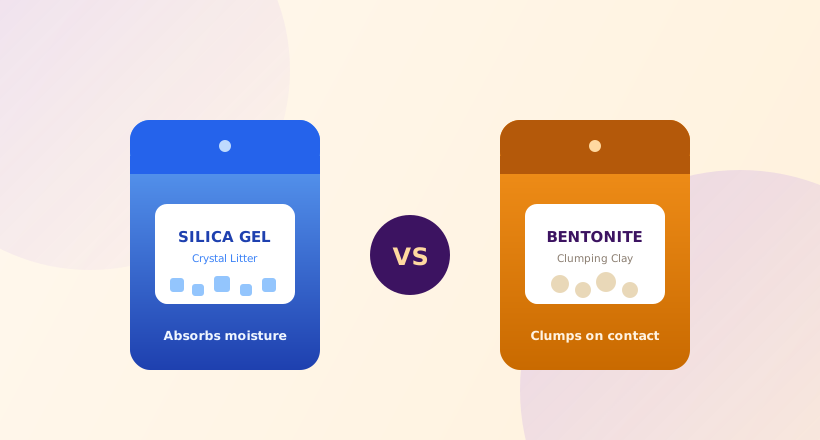
- Clumping isolation. Bentonite clay swells on contact with moisture and binds tightly around urine, sealing it into a solid clump that can be scooped out completely. Removing the clump removes the ammonia source itself, rather than just covering the smell.
- Mineral adsorption. Some clays and silica gel crystals draw moisture and odor compounds into their porous structure, trapping them internally rather than letting them clump or scoop out as a unit.
- Moisture absorption. Silica gel and some plant-based litters absorb liquid rapidly, which slows bacterial activity by drying out the environment bacteria need to produce ammonia.
| Litter type | Primary mechanism | Scooping needed | Best for |
|---|---|---|---|
| Clumping bentonite | Clumping isolation | Daily | Multi-cat homes, importers seeking shelf-stable stock |
| Silica gel crystal | Moisture absorption | Daily raking, less frequent full change | Single-cat, low-maintenance households |
| Non-clumping clay | Mineral adsorption | Daily, full change more often | Budget-conscious, lighter odor demands |
| Fragranced clumping litter | Clumping + masking layer | Daily | Households wanting a clean scent on top of real control |
Why fragrance isn't the same as odor control
A pleasant lavender or citrus scent on the bag doesn't mean the litter is neutralizing ammonia — in most cases, it's simply layering a stronger, more pleasant smell on top of the same underlying chemistry. Fragrance can make a box smell better for a short window right after cleaning, but it does nothing to stop bacteria from breaking down urea if the litter itself doesn't isolate or absorb waste effectively.
The most reliable odor-control litters combine both: a formula that physically removes or traps the ammonia source, with fragrance as a secondary layer rather than the main defense. That's also why an unscented, well-designed clumping litter can outperform a heavily scented low-quality one.
Getting the most odor control from any litter
Formula matters, but daily habits usually matter more. A handful of practices make a bigger difference than switching brands:
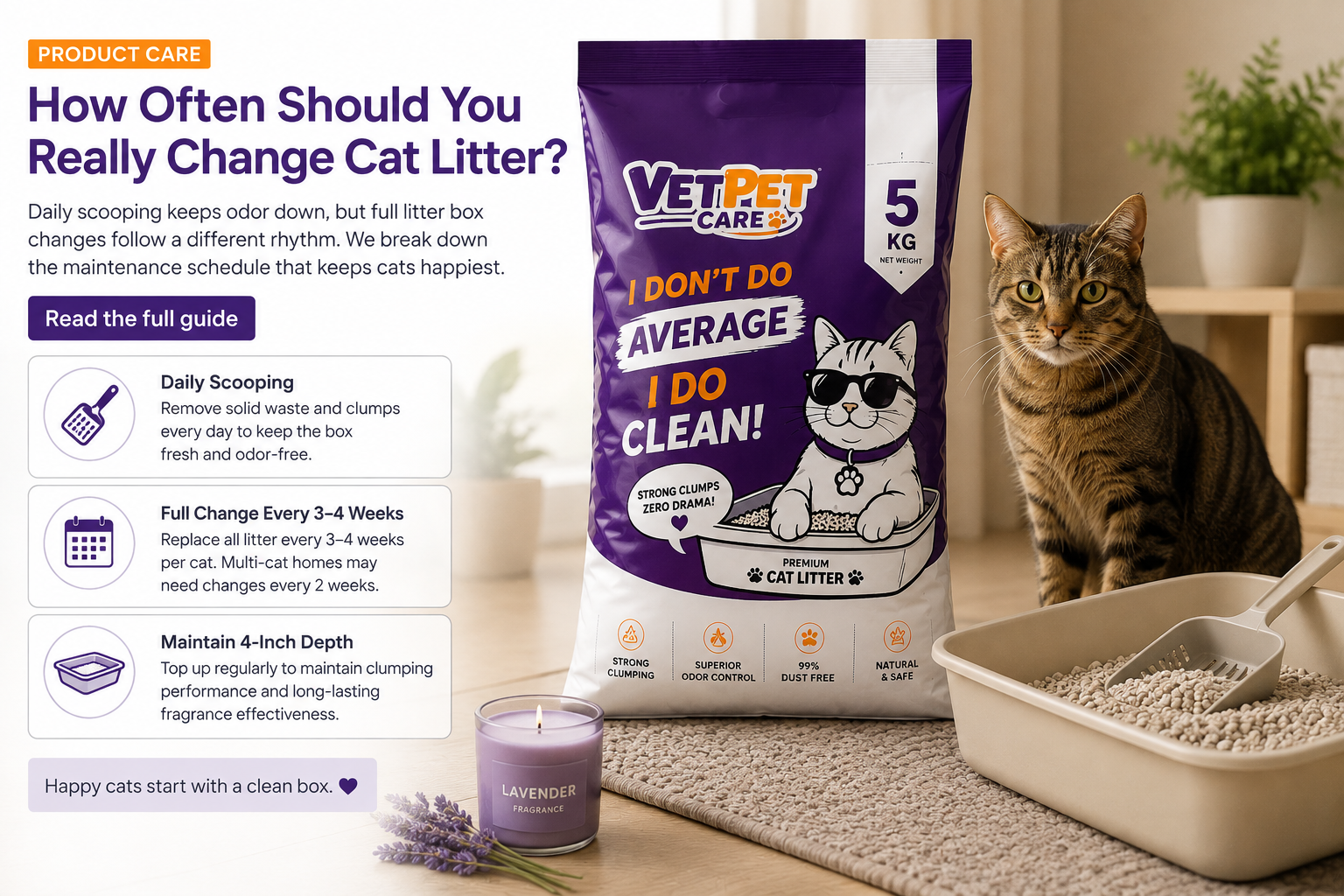
- Scoop daily, twice daily for multiple cats. Removing waste before bacteria fully act on it is the single biggest lever on odor.
- Keep litter at the right depth. About 4 inches (10 cm) lets clumps form fully instead of sticking to the tray base, where residue keeps producing odor.
- Wash the tray at every full change. Ammonia residue can soak into plastic over time and undermine even a fresh fill.
- Ensure airflow around the box. A litter area with poor ventilation traps ammonia in the room even when the box itself is well maintained.
Choosing an odor-control litter
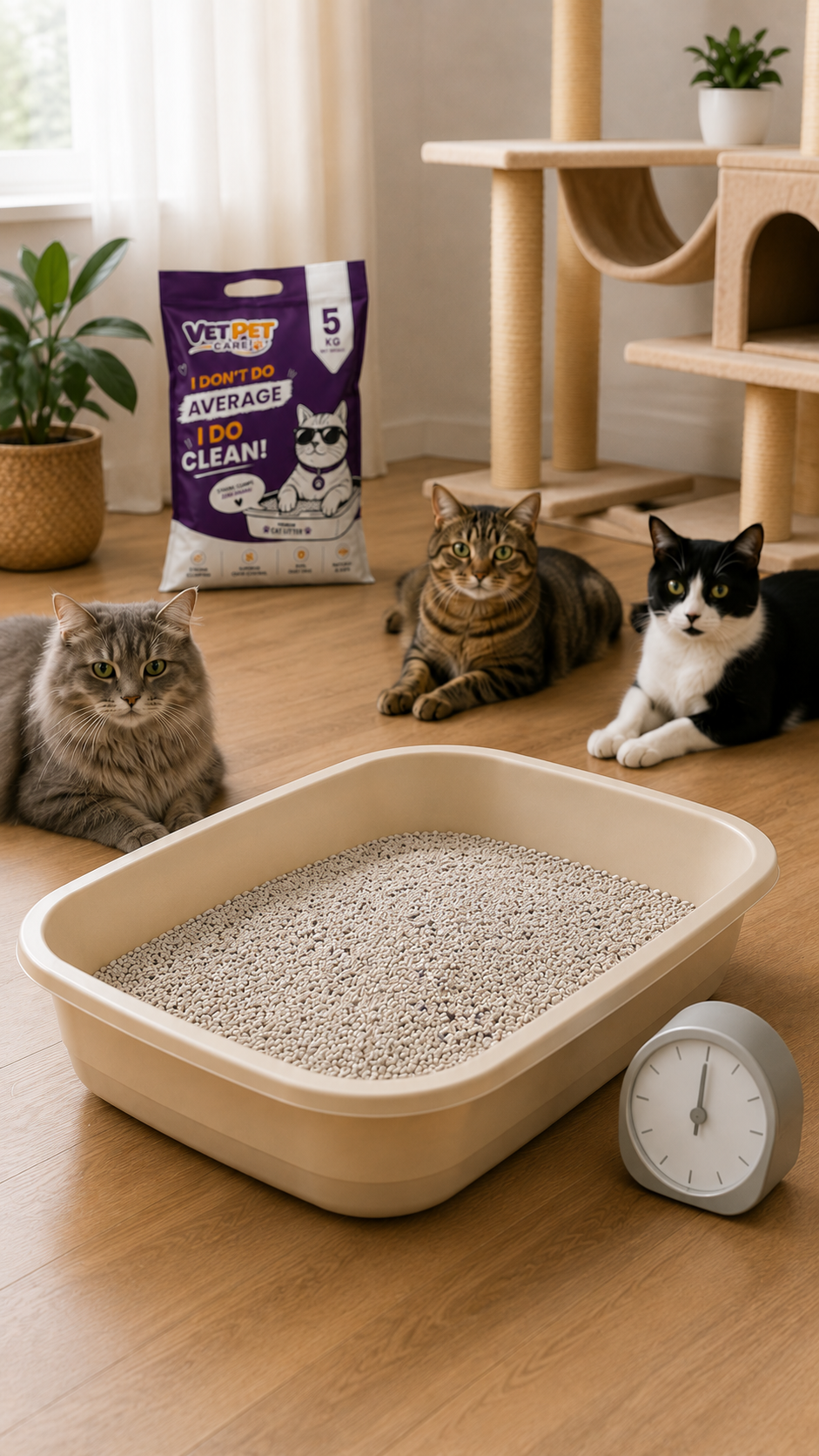
For most households, a dust-free clumping bentonite formula offers the strongest odor control because it physically isolates waste rather than just absorbing or masking it — and it scales well from single-cat homes to multi-cat households where odor builds up faster. VetPet Care's 99% dust-free bentonite clumps tightly around waste for a full scoop-and-remove, with a light fragrance layer on top rather than as the sole line of defense.
Distributors and importers evaluating odor-control claims on a private label or bulk order should ask suppliers which mechanism the formula relies on, not just what scent it carries — clumping strength and dust level are what actually determine how the product performs once it's on a customer's shelf.
Stocking or importing cat litter?
VetPet Care manufactures 100% natural bentonite clumping litter in 5kg and 25kg bags, six fragrances, with private label options. Get export pricing within 24 hours.
Request Export Pricing →