Silica Gel vs Bentonite Cat Litter: Which Is Actually Better?
Walk down any pet aisle and you'll see two very different types of litter competing for the same shelf space: crystal silica gel and clumping bentonite clay. Both control odor, but they work in completely different ways - and that difference affects your daily routine, your budget, and your litter box setup. Here's a balanced look at both.
In this guide
What silica gel and bentonite litter actually are
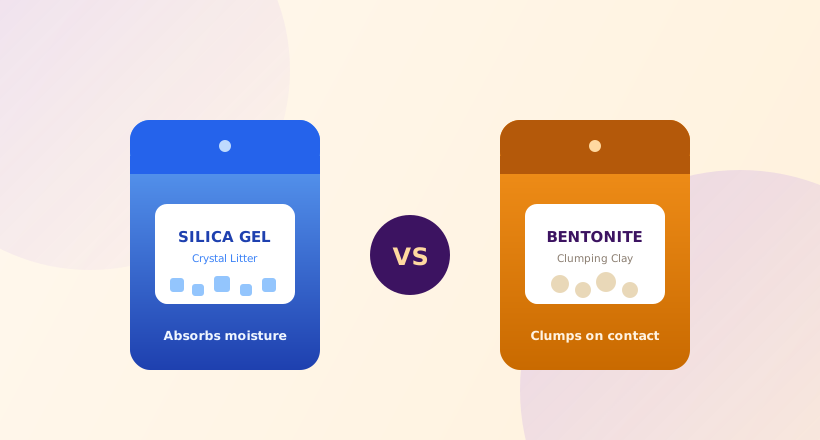
Silica gel litter is made from silica sand processed into small, porous crystal or bead-shaped granules. It works by absorbing liquid directly into the crystal structure, holding moisture and reducing odor without forming a solid mass around it.
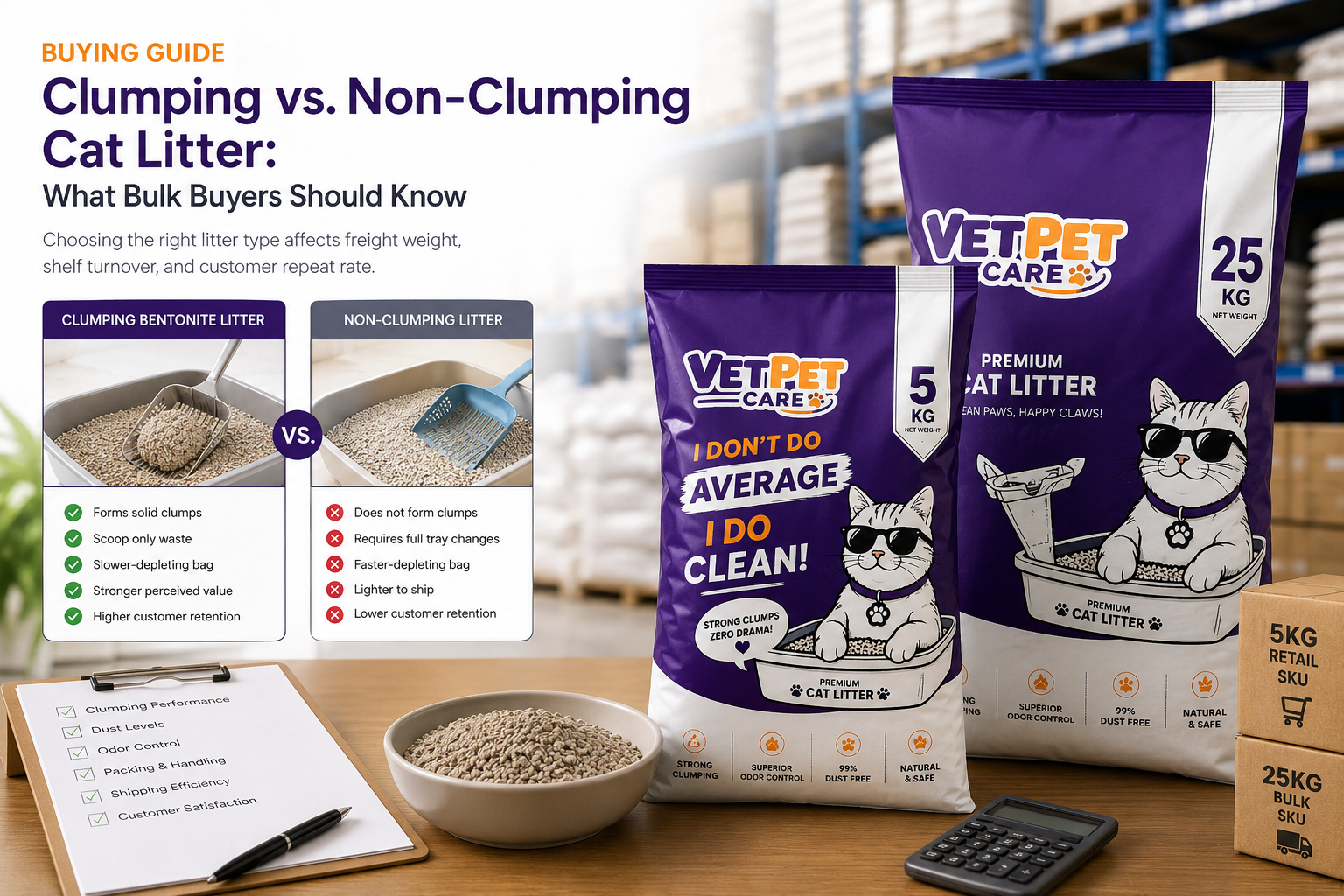
Bentonite litter is a naturally occurring clay, mined and processed into granules. When it contacts liquid, the clay swells and binds together into a firm clump, letting you scoop out just the soiled portion while leaving the rest of the tray clean and reusable.
That single mechanical difference - absorb-and-hold versus clump-and-remove - is the root of nearly every other difference between the two.
Head-to-head comparison
| Factor | Silica Gel | Bentonite |
|---|---|---|
| How it works | Absorbs moisture into crystals | Clumps solidly around waste |
| Daily maintenance | Rake/stir solids out | Scoop clumps out |
| Full change frequency | Set schedule, often longer | Every 3-4 weeks, sooner in multi-cat homes |
| Weight | Lighter per bag | Heavier, denser product |
| Typical price per bag | Usually higher | Usually lower |
| Tracking | Larger granules track less by weight | Fine granules can track more if not dust-controlled |
| Source material | Manufactured from silica sand | Natural clay, minimally processed |
Odor control and dust
Both types can control odor well when used correctly, but they get there differently. Silica gel's crystals absorb liquid and are often marketed for extended odor control between full changes, provided solid waste is removed regularly. Bentonite controls odor by sealing liquid waste inside a clump that's physically removed from the box daily, so odor doesn't have as much time to build up in the first place.
Dust levels vary by brand more than by litter type - a poorly processed bag of either material can be dusty. Look for a product that specifically states a low-dust or dust-free standard (such as 99% dust-free) rather than assuming one material is inherently cleaner than the other.
Cost per use
Bentonite bags are generally priced lower per kilogram, but you use and replace more litter over time since a portion leaves the box with every scoop. Silica gel bags typically cost more upfront, with the pitch being that you buy less often. In practice, actual cost per use depends heavily on how many cats you have and how strictly you follow the recommended change schedule - a multi-cat household will burn through either litter type faster than the packaging suggests.
Which should you choose?
- Choose bentonite if you want a lower-cost litter with a familiar daily scoop-and-remove routine, especially in multi-cat households where waste needs removing as it happens rather than on a fixed schedule.
- Choose silica gel if you prefer fewer full litter changes, have a single cat, and don't mind a higher price per bag in exchange for a different maintenance rhythm.
Both are reasonable choices - the "better" litter is the one that fits how often you're realistically willing to clean the box and what you're comfortable spending.
Prefer the clumping routine?
VetPet Care makes 100% natural bentonite clumping litter with a 99% dust-free formula, in 5kg and 25kg bags across six fragrances. Available for retail, distributor and bulk export orders.
Explore VetPet Care Litter →