Cat Litter HS Code & Import Duty: A Guide for International Buyers
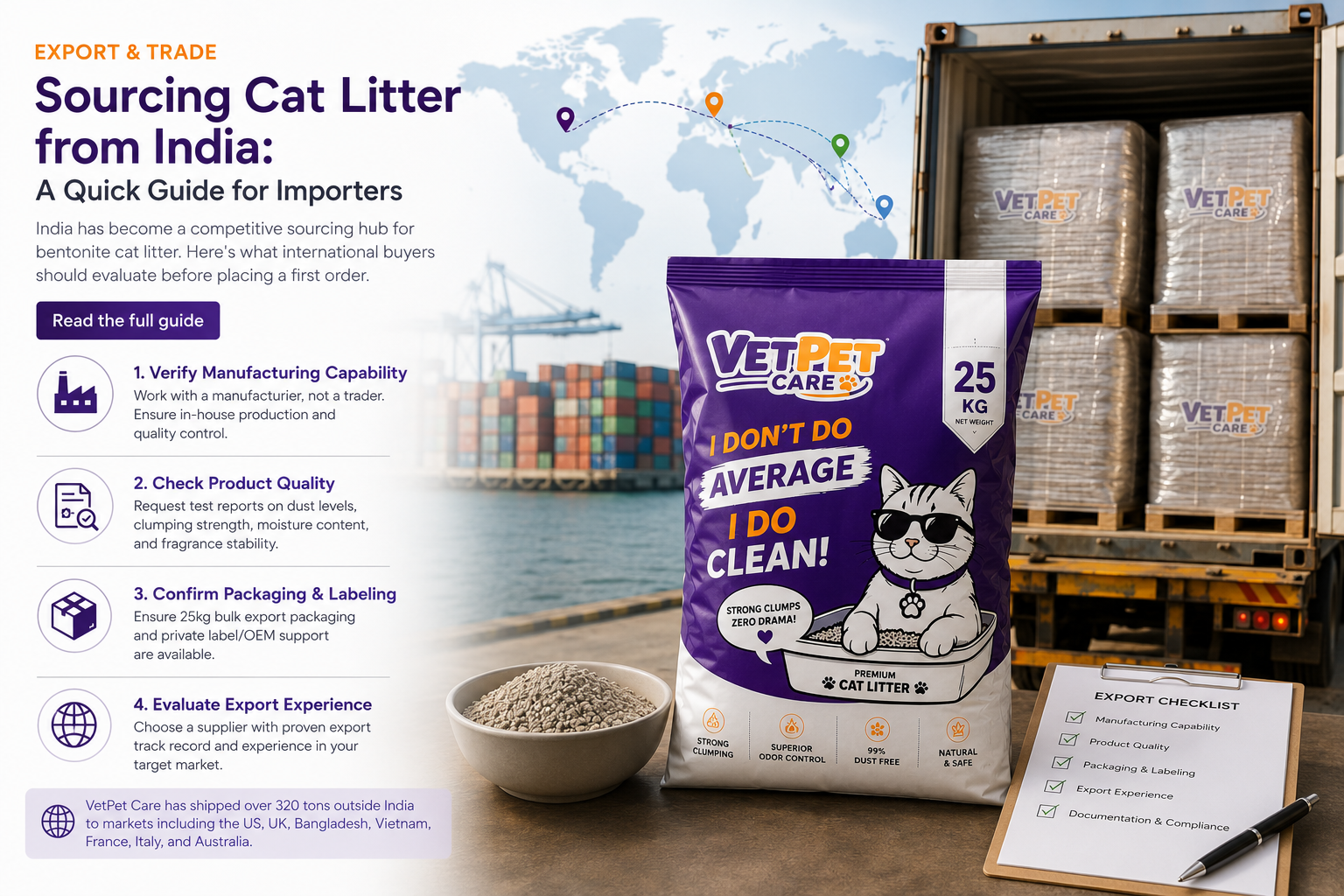
Before the first container of cat litter ever leaves the factory, someone on the buying side needs an answer to a boring but expensive question: what HS code does this fall under, and what will customs charge to let it in? Get the classification wrong and a shipment can sit in a bonded warehouse racking up demurrage while paperwork gets sorted out. Here's what importers and distributors actually need to know.
In this guide
HS codes: the basics importers need
The Harmonized System (HS) is an internationally standardized numbering system, maintained by the World Customs Organization, that classifies traded goods so customs authorities worldwide can apply consistent duties and collect trade statistics. The first six digits of an HS code are shared globally; countries then add two to four more digits to create their own national tariff line, which is what actually determines the duty rate and any extra requirements at the border.
For an importer, getting the classification right matters for three reasons: it sets the duty rate you'll pay, it determines whether any additional permits or inspections apply, and a mismatch between your declared code and what customs believes is correct can trigger delays, reassessment, or penalties on future shipments too.
The typical HS code for bentonite cat litter
Bentonite is a naturally occurring clay mineral, and unrefined or minimally processed clays are classified under Chapter 25 of the Harmonized System, which covers "salt, sulphur, earths and stone, plaster, lime and cement." Within that chapter, heading 2508 covers "other clays," with bentonite typically falling under the 2508.10 subheading.
Some countries extend this into a more specific 8 or 10-digit national code for pet litter or animal bedding products, since customs authorities increasingly track pet care products separately from raw industrial clay. This is exactly why the code your freight forwarder used for a shipment last year isn't automatically the right one for a different destination country this year.
What actually determines your import duty
Two shipments with the identical HS code can still attract different duty bills. The rate applied depends on several factors stacked together:
- Destination country's tariff schedule. Each country sets its own duty rate per HS code, and these are revised periodically as trade policy changes.
- Country of origin. Some countries apply different rates — sometimes zero — to goods originating from specific trading partners under a trade agreement, versus the standard "most favored nation" rate applied to everyone else.
- Declared customs value. Duty is usually calculated as a percentage of the shipment's customs value, typically the CIF value (cost, insurance, and freight), so how the invoice is structured affects the final duty amount.
- Additional levies. Beyond the base import duty, many countries apply VAT, GST, or other consumption taxes on top, calculated on the duty-inclusive value.
| Factor | What it affects | Who confirms it |
|---|---|---|
| HS / national tariff code | Which duty rate schedule applies | Customs broker, destination tariff database |
| Country of origin | Whether a preferential rate applies | Certificate of origin, trade agreement text |
| Customs (CIF) value | The base amount duty is calculated on | Commercial invoice, freight & insurance terms |
| Local taxes (VAT/GST) | Additional cost on top of duty | Destination country's tax authority |
Trade agreements and preferential rates
If VetPet Care's country of manufacture (India) has a free trade agreement or preferential tariff arrangement with your destination country, your shipment may qualify for a reduced or zero duty rate instead of the standard rate. Qualifying usually requires meeting the agreement's "rules of origin" — proving the product was substantially made or processed in the originating country — and providing a valid certificate of origin issued by the appropriate authority.
Since these agreements and the products they cover change over time, it's worth checking with your customs broker or destination country's trade ministry whether a current agreement applies to your specific HS code before assuming the standard rate is your only option.
Documents customs will usually ask for
Beyond the commercial invoice, packing list, and bill of lading every shipment needs, customs authorities and import partners commonly request documentation specific to a mineral-based consumer product like cat litter:
- Certificate of Analysis (COA). Confirms the product's physical and chemical specifications, useful for both customs classification and quality assurance on the receiving end.
- Safety Data Sheet (SDS). Documents composition, handling, and any hazard classification, which some destination markets require for mineral products regardless of how low-risk the material actually is.
- Certificate of origin. Required to claim any preferential duty rate under a trade agreement.
- Fumigation or phytosanitary certificate. Sometimes requested for the wooden pallets or jute packaging used in the shipment, not the litter itself.
VetPet Care provides a Certificate of Analysis and Safety Data Sheet for every export order — you can request a copy of both here before finalizing your customs paperwork.
Why a customs broker still matters
None of the information above replaces a licensed customs broker in your destination country. Tariff schedules, trade agreements, and documentation requirements change, and a broker who works your specific port and product category daily will catch country-specific quirks — like a local tax that applies only to packaged pet products, or a labeling rule that has nothing to do with the HS code itself — long before they become a hold-up at the border.
The most efficient importers treat classification as a conversation between their supplier and their broker, not a one-time lookup. VetPet Care shares full product specifications, COA, and SDS documentation with every export partner specifically so that conversation can happen before the container is booked, not after it arrives at port.
Planning a cat litter import order?
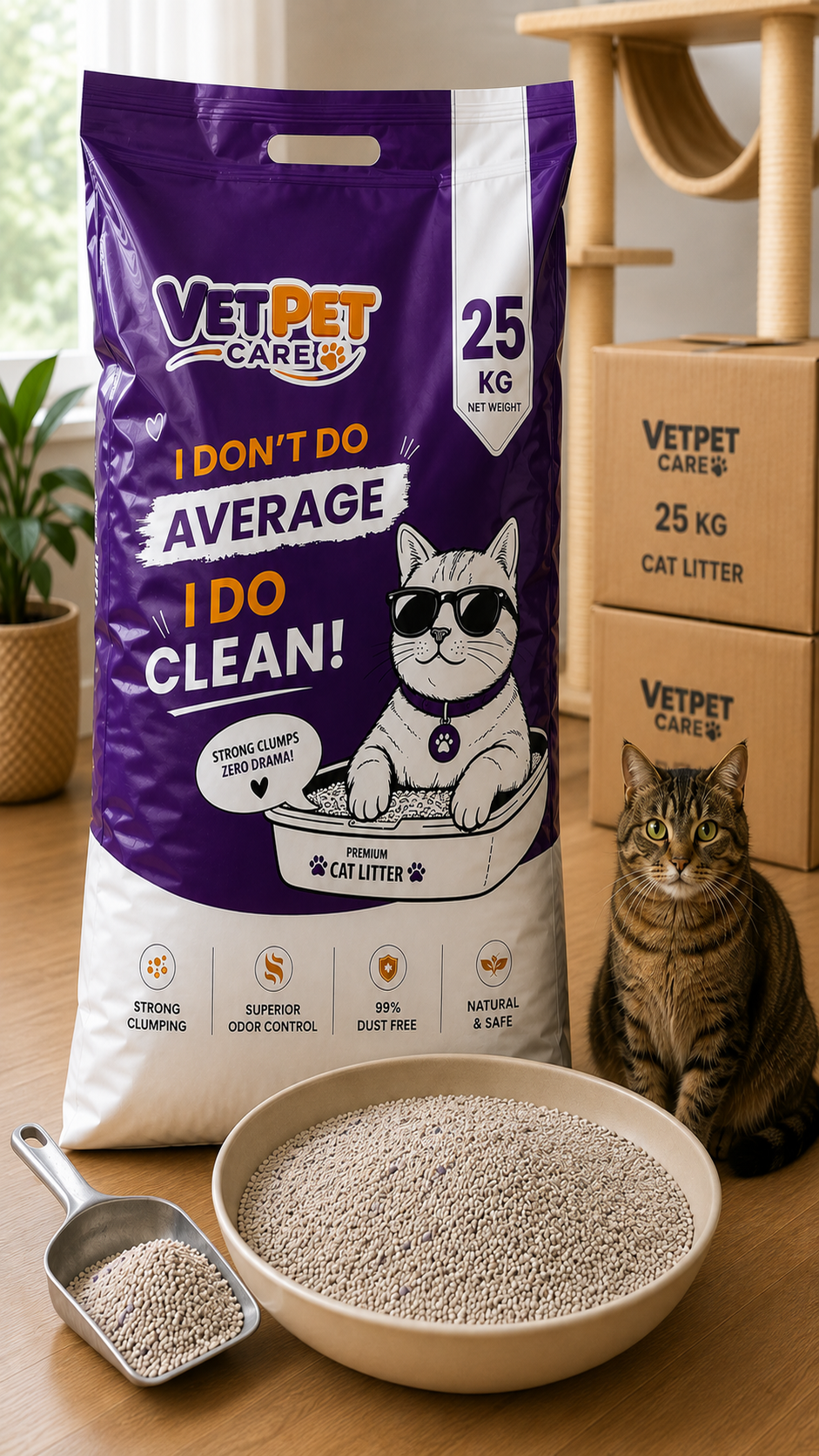
VetPet Care manufactures 100% natural bentonite clumping litter in 5kg and 25kg bags, with full export documentation including COA and SDS. Get FOB/CIF pricing within 24 hours.
Request Export Pricing →