Cat Litter Container Loading Guide: How Many Bags Fit in a 20ft or 40ft Container?
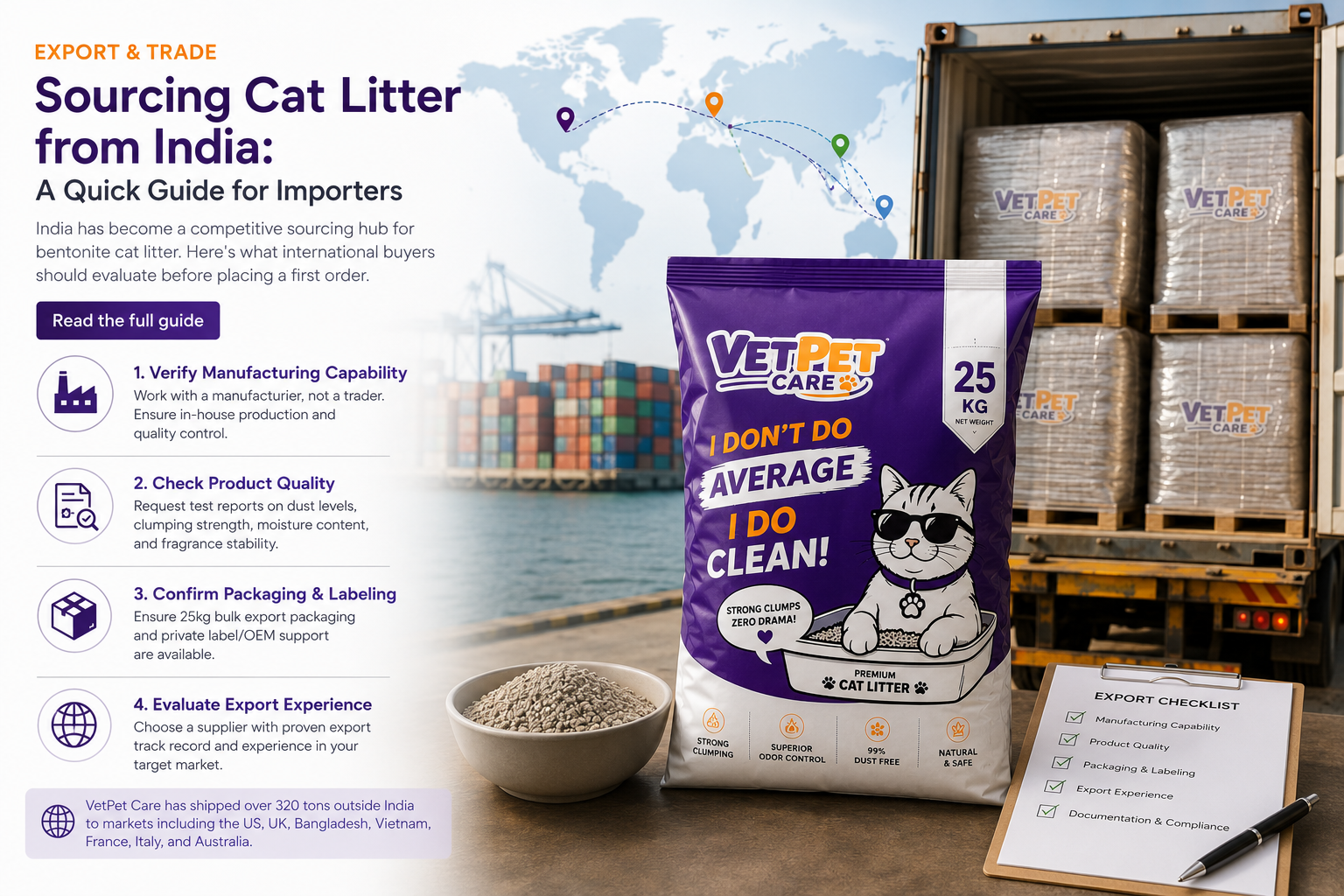
Before you can compare landed cost across suppliers, you need a working number for how much cat litter actually fits in a container. Here's a practical answer for importers planning a full container load (FCL) order, and why cat litter behaves differently from lighter cargo.
In this guide
Why weight, not volume, limits cat litter containers
Bentonite cat litter is a dense, granular mineral product. Unlike bulky, lightweight cargo (think foam packaging or empty bottles), a cat litter shipment typically hits the container's legal road-transport weight limit long before the container's physical volume is full. That's why cat litter is usually described as a "weight-out" cargo rather than a "cube-out" cargo — the number that matters most is tons per container, not cubic meters.
This matters directly for your sourcing decision: a bigger container doesn't automatically mean proportionally more product if the cargo is dense, which changes how you should compare freight quotes between 20ft and 40ft options.
Approximate container capacity by size
| Container | Typical payload limit | Approx. 25kg bags | Approx. 5kg bags |
|---|---|---|---|
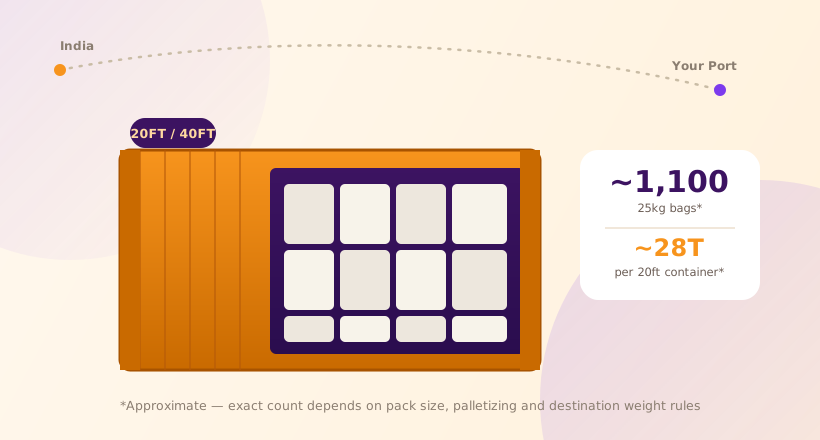
| 20ft Standard | ~26-28 tons | ~1,000-1,100 bags | ~5,000-5,500 bags |
| 40ft Standard | ~26-28 tons | ~1,000-1,100 bags | ~5,000-5,500 bags |
| 40ft High Cube | ~26-28 tons | ~1,000-1,100 bags | ~5,000-5,500 bags |
Figures are approximate and vary by packaging weight, palletizing method, dunnage, and the destination country's specific road-weight regulations. Always request an exact loading plan from your supplier for your target volume and port.
20ft vs 40ft: which should you book?
Since weight — not volume — is usually the limiting factor for cat litter, the practical guidance is:
- Choose 20ft if your order is a single-product cat litter shipment. You'll reach the weight limit well before filling a 40ft container's extra volume, so the smaller box is typically the more cost-efficient booking.
- Consider 40ft only if you're combining cat litter with lighter, bulkier products in the same shipment (mixed-SKU orders), where the extra volume genuinely gets used.
If you're unsure, ask your supplier for a loading plan comparing both options against your actual pack size mix and order volume — a direct manufacturer can usually turn this around quickly.
Documents you'll need for an FCL import
- Commercial invoice — itemized value of the shipment for customs.
- Packing list — bag counts, pack sizes, carton/pallet breakdown and container weight.
- Bill of lading — the shipping line's contract of carriage and title document.
- Certificate of origin — confirms the goods were manufactured in India, sometimes required for preferential duty treatment.
- Fumigation certificate — required by many countries when wood pallets are used in the container.
Your destination country may have additional product-specific import requirements — check with your customs broker or ask your supplier what documentation they typically prepare for shipments to your market.
How to plan your first container order
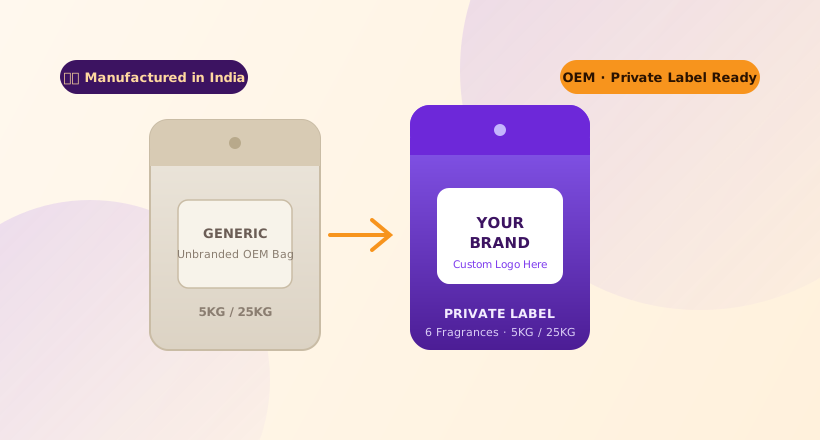
- Decide your pack size mix. Pure 25kg bulk maximizes weight efficiency; a mix with 5kg retail bags adds flexibility for shelf-ready stock.
- Confirm your destination port and any local weight restrictions. Some countries apply stricter road-weight limits than others.
- Request a loading plan and FOB/CIF quote based on your confirmed pack size mix and container choice.
- Review documentation requirements for your market before the container ships, not after it arrives.
- Book and track — a supplier with export experience should be able to share vessel schedule and estimated transit time.
Planning a container order?
VetPet Care is a direct manufacturer of 100% natural bentonite cat litter with 320+ tons already shipped outside India. Share your destination port, pack size mix and target volume — we'll return a loading plan with FOB/CIF pricing within 24 hours.
Request a Loading Plan & Quote →