Can You Flush Cat Litter? Why It Belongs in the Trash, Not the Drain
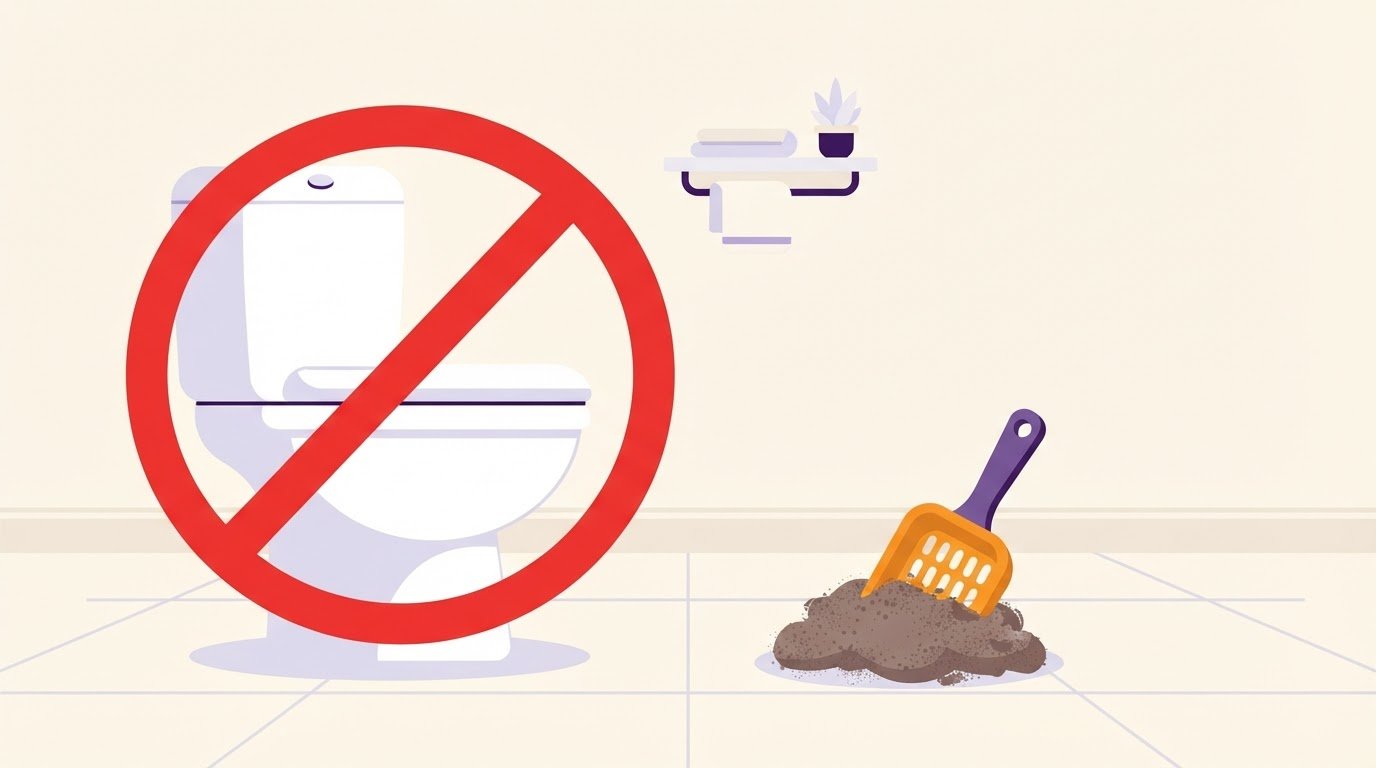
It's a question almost every new cat owner asks at some point while standing over the toilet with a scoop in hand: can this just go down the drain? For clumping bentonite litter, the answer is a firm no - and even litters marketed as "flushable" come with a catch most bags don't mention.
In this guide
Why clumping litter clogs pipes
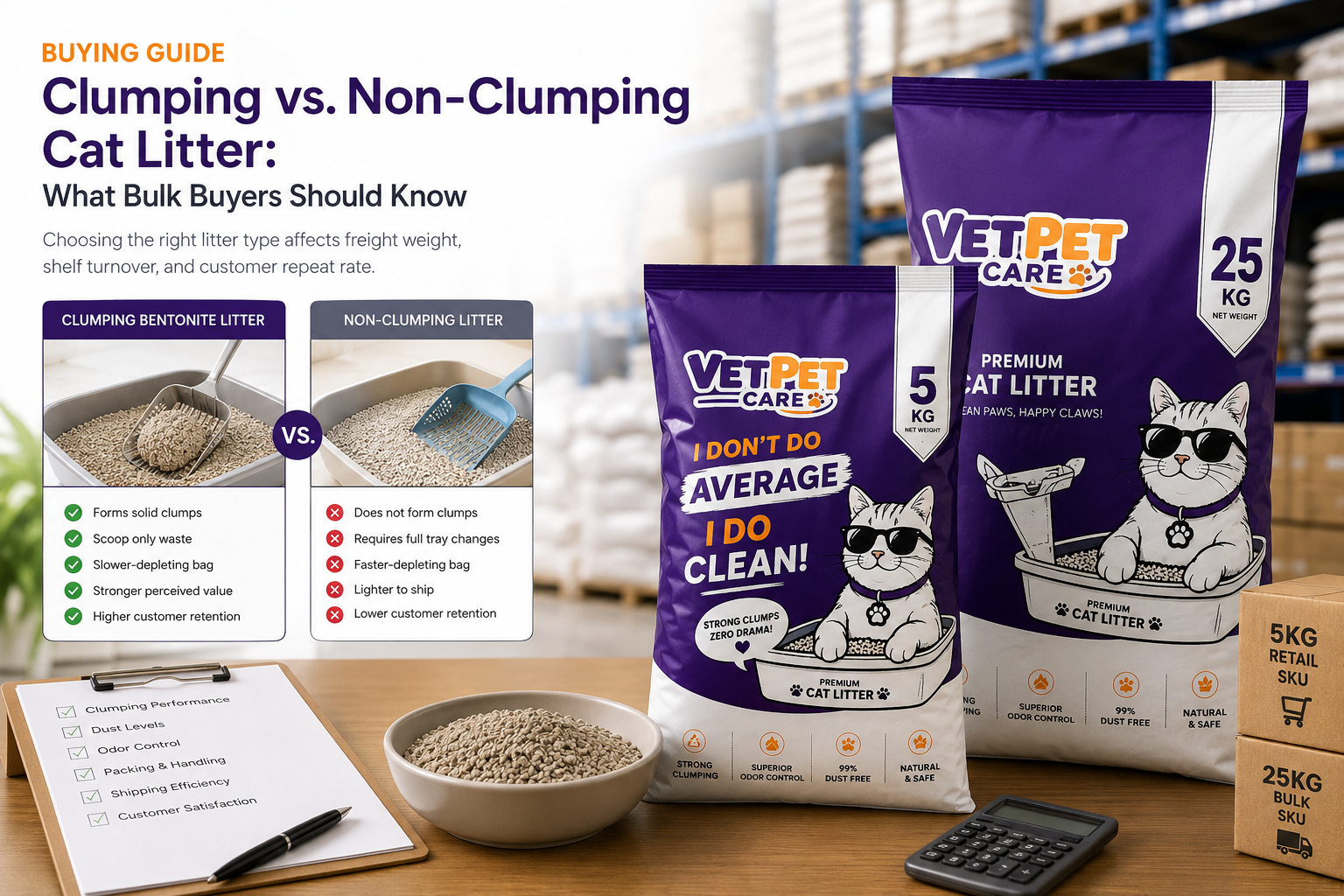
Bentonite clumping litter works by absorbing moisture and swelling into a solid, removable clump — that's the entire point of the formula, and it's exactly what makes it dangerous for plumbing. Flush even a small amount, and the same swelling reaction happens inside the pipe instead of the litter tray, hardening into a mass that water can't easily push through.
Unlike toilet paper, bentonite doesn't break down in water — it does the opposite. Repeated flushing, even in small amounts over time, is one of the more common causes of slow drains and full blockages that plumbers trace back to a litter box upstream.
What about "flushable" litter brands?
Some litters, usually made from paper pulp, wood fiber, corn, or wheat, are marketed as septic- or sewer-safe because they break apart in water rather than clumping and hardening. These are less likely to cause a physical blockage than bentonite, but "flushable" on a bag doesn't mean a blanket yes:
- Septic systems vary. Many septic system manufacturers explicitly advise against flushing any solid waste beyond human waste and toilet paper, regardless of what the litter bag claims.
- Old or narrow pipes are more vulnerable. Older plumbing, especially in older homes, has less margin for error with anything beyond its intended use.
- The parasite concern still applies. Breaking apart in water doesn't address the biological risk described below — that risk exists regardless of litter material.
Most water utilities and veterinary associations recommend treating "flushable" as a marketing claim worth skepticism, not a green light.
The parasite risk behind the warning
Beyond plumbing, there's a public health and environmental reason cat waste is discouraged from entering the water system at all: cat feces can carry Toxoplasma gondii, a parasite that cats can shed in their stool. Standard municipal wastewater treatment is not designed to filter out or destroy this parasite's resilient oocysts.
In coastal regions, treated wastewater discharge has been documented as a pathway for Toxoplasma to reach rivers and oceans, where it has been linked to illness in marine mammals, most notably sea otters along the California coast. Flushing cat waste — litter or not — is one of the more avoidable contributors to that pathway.
This is also the reason pregnant women are advised to avoid litter box duty entirely where possible; we cover that specific risk in more detail in our guide on cat litter safety during pregnancy.
How to dispose of used litter correctly
The simplest, safest method works for every litter type, clumping or not:
- Scoop daily into a sealed bag. A dedicated small trash bag or compostable scoop-bag keeps odor contained and waste ready for collection.
- Tie it off and place it in regular household trash. Municipal landfill disposal, not the drain, is the standard recommendation almost everywhere.
- Check local rules before composting. Some areas offer green-waste programs that accept certain plant-based litters, but cat waste should never go into compost used for edible plants, due to the same parasite risk.
- Wash your hands after handling, every time. Simple habit, meaningful protection.
What to do if litter has already clogged a drain
If a clump is already lodged in a pipe, avoid chemical drain cleaners as a first step — they rarely dissolve hardened bentonite and can make the eventual fix messier. A plumber's auger (drain snake) is the usual tool for physically breaking up and clearing the blockage. For anything beyond a simple slow drain, it's worth calling a plumber rather than repeating the flush that caused the clog in the first place.
Stocking or importing cat litter?
VetPet Care manufactures 100% natural bentonite clumping litter in 5kg and 25kg bags, six fragrances, with private label options. Get export pricing within 24 hours.
Request Export Pricing →